 ElectrifiedExperts
Short answer: are home batteries worth it in 2026 depends almost entirely on why you want one. If you’re buying for backup power and peace of mind, owners are overwhelmingly glad they did it. If you’re buying purely to save money in a state with cheap electricity and a reliable grid, most people who run the numbers end up disappointed. That split is the whole story, and it got sharper this year because the 30% federal tax credit for battery buyers expired at the end of 2025. Below is the real math, the real complaints, and how to figure out which camp you’re in.
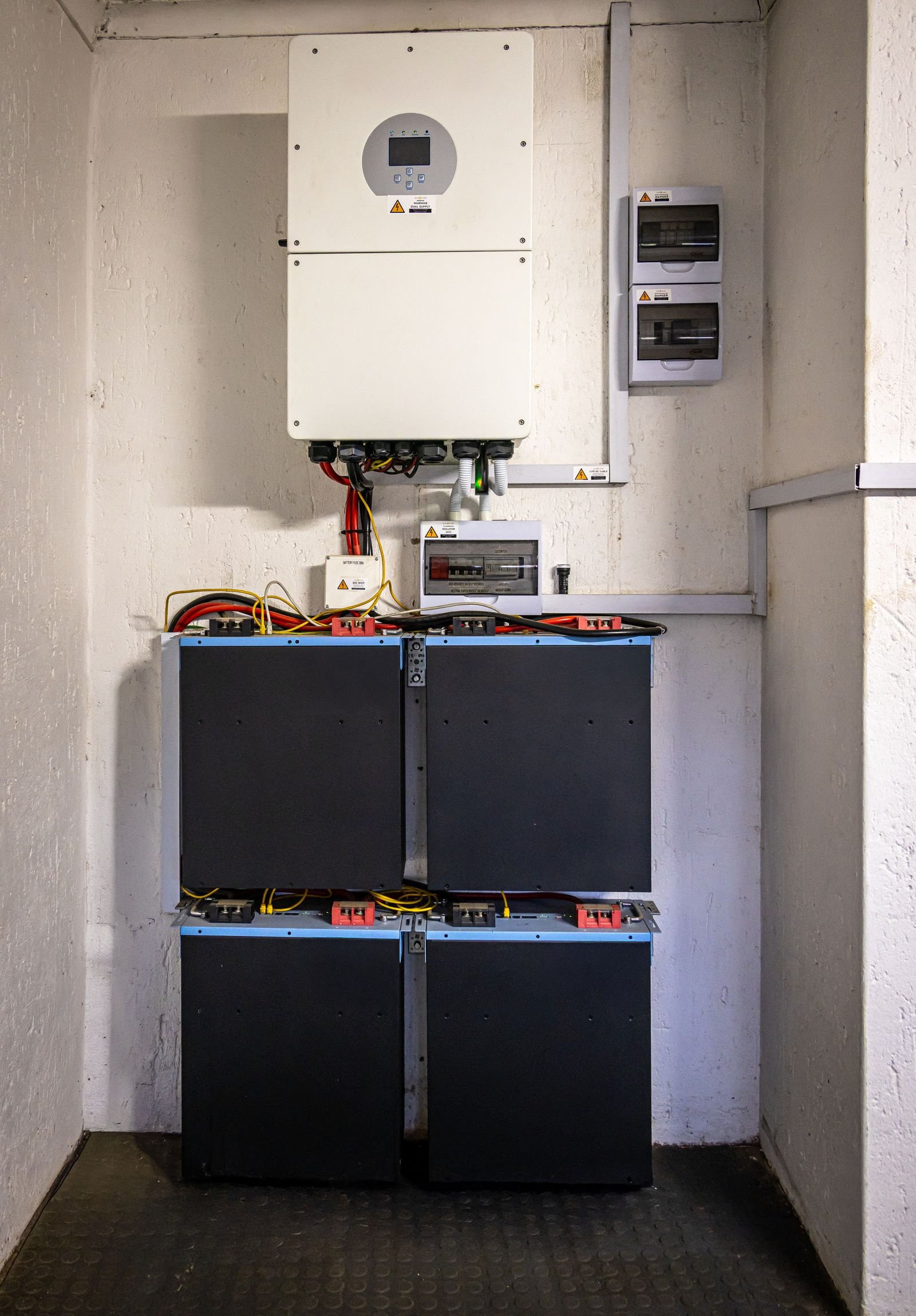
Are home batteries worth it, or is that a money pit?
It comes down to motivation. A home battery is worth it if you value backup power during outages, live somewhere with expensive time-of-use rates or virtual-power-plant income, or have solar under a plan like California’s NEM 3.0. It’s usually not worth it on pure financial payback alone in a place with cheap, reliable grid power.
That’s the honest version, and it’s worth sitting with for a second because it cuts against how these systems get marketed. A battery is not a savings account with a guaranteed return. In some situations it pays for itself in a few years. In others it never does, and the owners who bought it anyway are still happy because they were buying something else entirely: the ability to ignore a blackout.
How much does a home battery cost in 2026?
A Tesla Powerwall 3 gives you about 13.5 kWh of usable storage and 11.5 kW of continuous output, and it runs roughly $13,000 to $16,500 installed in 2026 depending on your electrical panel, permitting, and how many you stack. Source: SmartEnergyUSA. Other brands land in a similar range per unit. That’s the number every payback calculation starts from.
Here’s the change that matters most this year, and a lot of older forum advice hasn’t caught up to it. The 30% federal Residential Clean Energy Credit (IRS Section 25D) for a battery you own outright ended December 31, 2025. Source: SolarInsure. If you buy a battery with cash or a loan in 2026, that roughly $4,000 to $5,000 discount is gone. So when you read a 2023 or 2024 thread where someone factored in the tax credit, mentally strip it out.
There’s one exception. Leased and power-purchase-agreement (PPA) systems can still capture the credit through the company that owns the equipment, under Section 48E, for systems placed in service by the end of 2027. The savings flow to the panel owner, not to you directly, though it can show up as a lower monthly payment. Source: SolarInsure.
The honest case against a home battery
Let’s give the skeptics the floor first, because they’re right more often than battery brochures admit. The math on home battery payback in a low-cost-power state is rough.
On r/solar, one shopper walked away for exactly this reason:
“I looked at a Tesla Powerwall, but the installed price was pushing $16,000, which put the payback past 9 years … instead I went the DIY route.”
Another commenter in that thread put it more bluntly:
“People in U.S. have to go DIY because it doesn’t make sense to spend $16-20k on a single battery install.”
Source: The Cool Down. And with the tax credit gone in 2026, even that partial saving people used to count on has disappeared. On SolarPanelTalk, one owner did the arithmetic and found the whole return was basically the credit:
“Honestly, the only savings would be the $3k or so from the tax credit. Otherwise there’s no ROI on this battery at all.”
A forum veteran replied with the line that should give any ROI-driven buyer pause:
“With a Grid-Tie PV system, you might break even in 7 years. But once you add batteries, break even may never occur.”
Source: SolarPanelTalk. Over on Tesla Motors Club, the framing was the same. A battery as an investment is weak, and it only makes sense if you actually care about outages:
“As an investment, it’s not worth it… You can probably save a few hundred bucks a year.”
The same discussion landed on the real test:
“If you’re not concerned with power outages, power walls make no sense at all.”
Source: Tesla Motors Club. So if your grid is stable, your rates are flat and low, and you’re doing this to make money, believe these people. A few hundred dollars a year against a $14,000 box is not a good trade.
The case for a home battery, in owners’ own words
Now flip it. The same product, bought for a different reason, produces some of the happiest owners you’ll find anywhere. The pattern is consistent: people who buy for resilience don’t regret it.

Start with the quality-of-life change. A work-from-home owner described what a battery actually buys you day to day:
“I work from home, and I don’t even notice power outages anymore.”
Source: The Cool Down. In areas hit by real storms, the value gets concrete fast. A homeowner in eastern North Carolina made the calculation after a hurricane:
“I lost power during Helene for nine days. This is what prompted me to get Powerwalls… I have had two multi-hour outages since… I had no issues during either one.”
Source: The Cool Down. Nine days without power will reset your definition of a worthwhile purchase.
Then there are the high-value states, where the money case actually holds up. In Southern California, one household paired a Powerwall with solar and changed their whole relationship with the utility:
“Edison owes us $1,100/year. We have a $0 bill… We don’t cringe when turning on the AC in summer months.”
Source: The Cool Down. Under California’s NEM 3.0 rules, which slashed solar export credits by roughly 75% compared to the old NEM 2.0 (source: NerdWallet), a battery is close to mandatory for solar to make sense, because it lets you store your own power instead of selling it back for pennies. One owner under those rules reported a payback most skeptics would call impossible:
“In the first year I saved $7K on utilities.”
That was a dual-Powerwall setup with a roughly four-year breakeven. Source: The Cool Down. Same hardware the skeptics called a money pit. Different state, different rate structure, different answer.
How to decide if a home battery is worth it for you
The two sides aren’t contradicting each other. They’re describing different situations. Here’s how to figure out which one is yours.
- Buy for backup and resilience, not pure payback. If you value keeping the lights, fridge, and internet on during an outage, a battery delivers that every single time. That’s the purchase almost nobody regrets.
- Know whether your state stacks the deck in your favor. Batteries pencil out best in high time-of-use states like California, places with virtual-power-plant income like Massachusetts and Texas, anywhere under NEM 3.0, and regions with frequent outages.
- In cheap-power, reliable-grid areas, the honest money answer is often no. If your rates are low and flat and the grid rarely blinks, a battery won’t pay for itself. Owning it is a comfort purchase, not an investment.
- Consider cheaper alternatives. A DIY LiFePO4 battery build costs a fraction of a professionally installed unit, and a portable power station can cover a fridge and a few devices for a few hundred dollars if all you want is short-outage insurance.
- Do the 2026 math without the tax credit. The 25D credit is gone for batteries you own. Any payback estimate that includes it is out of date.
- Get itemized quotes and size to essential loads. You rarely need to back up the whole house. Sizing to your critical circuits keeps the system smaller and the price lower.
Frequently asked questions
Is a Powerwall worth it without solar?
It can be, but only for backup. Without solar or a time-of-use rate to arbitrage, a Powerwall mostly buys you outage protection rather than bill savings. If your grid is reliable, a portable power station or a generator may cover the same need for far less.
What’s a realistic home battery payback period?
It ranges wildly. Under California NEM 3.0 with solar, some owners report roughly four years. In a cheap-power state, forum veterans warn that breakeven “may never occur.” Your rates, your outages, and your state’s programs decide it, not the hardware.
Did the home battery tax credit really end?
Yes, for batteries you buy and own. The 30% federal Residential Clean Energy Credit (Section 25D) ended December 31, 2025. Leased and PPA systems can still capture the credit through the company that owns the equipment under Section 48E.
Are home batteries worth it in a state with cheap electricity?
On money alone, usually no. Low, flat rates leave little to save, and the payback stretches past the warranty. If you still want one, buy it for backup value and treat any bill savings as a bonus.
The clean way to think about it: figure out your real reason first. If it’s resilience, or you live in California, Massachusetts, Texas, or anywhere the grid gives out, a home battery is likely worth it. If it’s purely ROI in a cheap, stable-grid state, keep your $14,000 and revisit when your rates or your outages get worse.
Trey Linder writes about EVs, home batteries, and rooftop solar for homeowners at Electrified Experts.