 ElectrifiedExperts
Most home EV charger installation cost quotes land somewhere between $800 and $3,600, with a typical Level 2 job in the $1,200 to $2,500 range. The spread is huge because you’re not really paying for the charger. You’re paying for the wire, the labor hours, and how far your garage sits from the electrical panel. A short run to a panel with spare capacity is cheap. A long run that needs a panel upgrade or trenching is not. If you just got a number and you’re wondering whether it’s fair, this post walks through what real owners actually paid and how to sanity-check your own quote.
What is a fair EV charger installation cost?
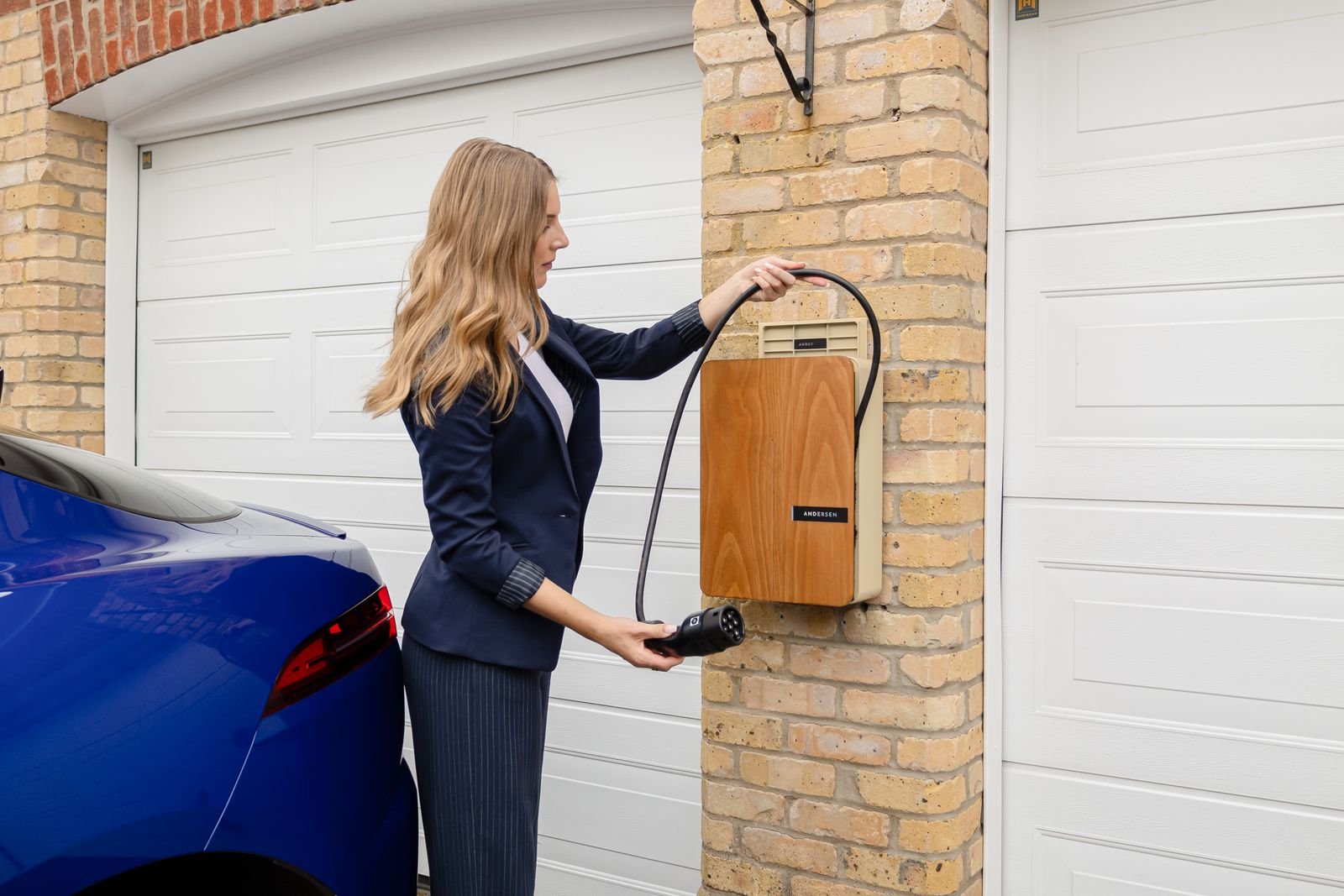
A fair home EV charger installation cost for a standard Level 2 setup is roughly $1,200 to $2,500 in 2026, assuming a moderate wire run and a panel with room to spare. Quotes climb past $3,000 when the job needs a new sub-panel, a service upgrade, or a long conduit run. Anything under $1,000 usually means a short, simple install.
Those are ballpark numbers. The only way to know if your quote is fair is to compare it against what other owners paid for a similar job, then break your own quote into parts. Let’s do both.
Real Level 2 charger install cost numbers from owners
Owners post their quotes constantly, and the honest ones itemize. A long sanity-check thread on the F-150 Lightning forum collected a bunch of them. One New York homeowner shared a detailed breakdown:
A New York owner was quoted $3,570 total: $2,115 in materials and $1,455 in labor for 17 man-hours. Source: F-150 Lightning Forum.
That’s near the top of the range, and the labor hours tell you why. Seventeen man-hours is a big job. Compare it to an Oregon owner in the same thread who got a very different number:
“$1,800 total for all materials and a Journeyman and an Apprentice for six hours.” Source: F-150 Lightning Forum.
Same type of job, half the price, because the work was six hours instead of seventeen. Then there’s the case where the panel itself is the problem. A Massachusetts owner reported paying $3,200 for a new meter plus a sub-panel, which is really two projects stacked together: the electrical upgrade and the charger. Over on r/electricvehicles, a Chevy buyer summed up the middle of the market when they mentioned a straightforward “$2k” install quote and asked about manufacturer reimbursement.
Put those together and you get a real range: about $1,800 for a clean six-hour job, roughly $2,000 for a typical one, and $3,200 to $3,570 when a panel upgrade or a long labor block is involved.
What actually drives the price
Once you know the range, your quote either fits or it doesn’t. Here’s what pushes it up or down:
- Distance from the panel. Every foot of the run adds copper and labor. Owners in the forum thread pegged copper wire at about $15 per foot, so a 60-foot run to a detached garage adds up fast.
- Wire gauge. A 48-amp charger needs heavier wire than a 32-amp one. The thread specifically warned owners to watch the gauge, because #2 copper and 2/0 copper are very different in price, and an underspec’d wire is a safety problem, not a savings.
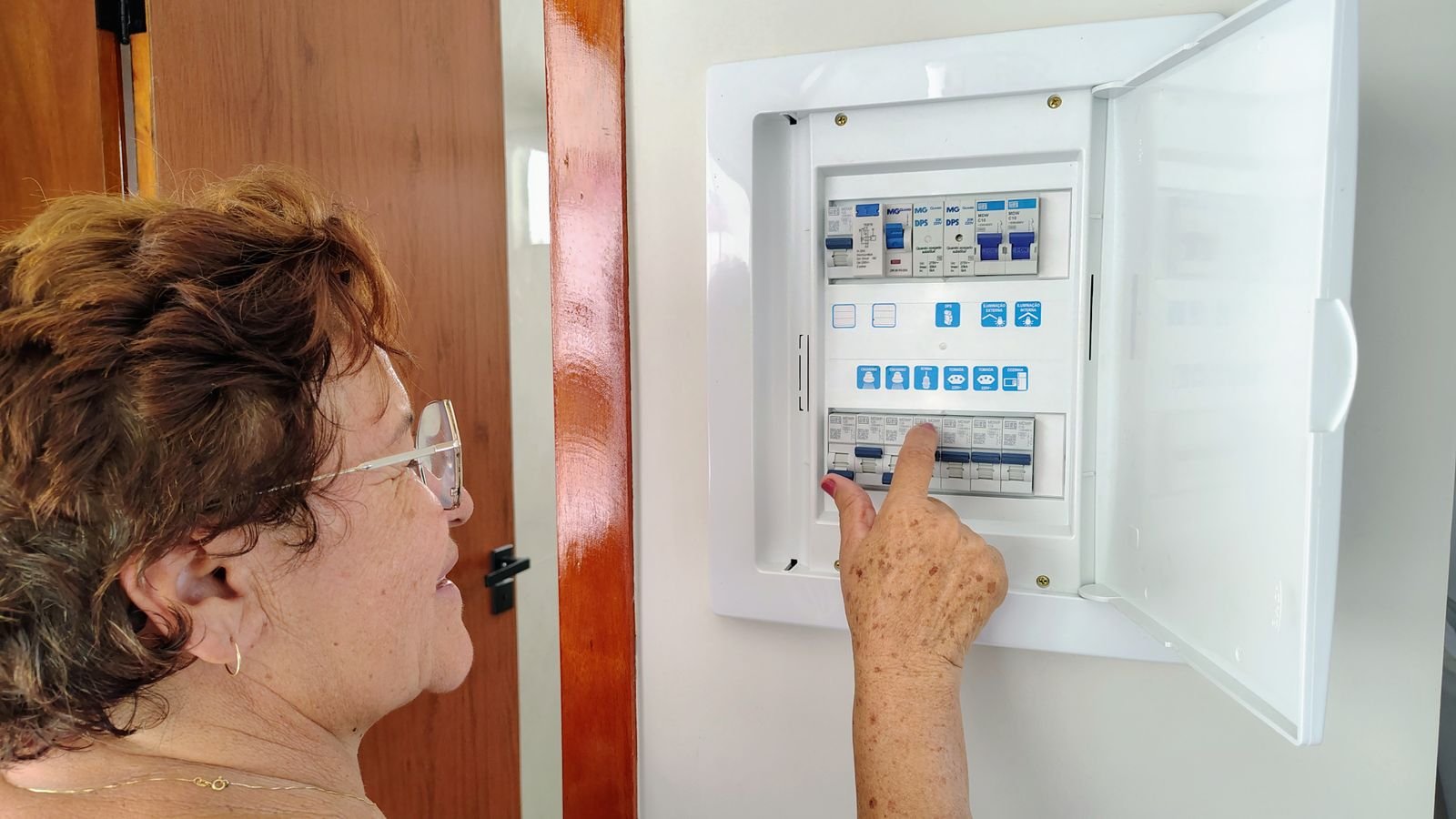
- Panel capacity. If your main panel is full or your service is only 100 amps, the electrician may need a load calculation and possibly a sub-panel or service upgrade. That’s the single biggest cost jump, and it’s what turned the Massachusetts job into a $3,200 bill.
- Trenching. A detached garage across the yard can mean digging a trench, which is its own line item.
- Permit and inspection. Most areas require both. It’s usually a modest fee, but a quote with no permit line is a red flag, not a bargain.
Where these installs go wrong
Two things blow up an install budget, and both show up in owner reports over and over.
The first is the wiring path. What looks like an easy run on paper can turn into a fight once the electrician is in the walls. One owner posted a thread literally titled “Electrician Struggling to Install Level 2 Charger” after the crew couldn’t route new wiring through the existing conduit from the basement panel to the garage. When a clean path doesn’t exist, you’re paying for a new one.
The second is cutting corners on gear to save money, which can get genuinely dangerous. In one thread a homeowner described how their Wallbox “Almost Caught on Fire,” and a separate owner in the same discussion reported that “the plug head of the adapter was melted.” Those aren’t installation-cost stories exactly, but they’re a warning: the money you save buying a no-name charger or a cheap adapter is the money you were supposed to spend on not having a fire in your garage.
How to lower your EV charger installation cost
The good news is you have real levers here. This is where a fair quote gets fairer, and where an unfair one gets exposed. Work through these:
- Get three or more itemized quotes. The single most repeated piece of advice in the forum thread was to get multiple quotes and watch the wire gauge. Itemized means materials and labor split out, so you can see whether you’re paying for a six-hour job or a seventeen-hour one.
- Skip the panel upgrade with a smart splitter. If your panel is full, you may not need to touch it. One r/electricvehicles owner called a splitter a “Great way to avoid a panel upgrade!” after using a NeoCharge smart splitter on a 40-amp range circuit, a comment that pulled 36 upvotes. A splitter lets your charger share an existing 240V dryer or range circuit, taking turns so you never overload it. Avoiding a sub-panel can save well over a thousand dollars.
- Weigh a NEMA 14-50 outlet against a hardwired unit. A 14-50 outlet lets you plug in a portable EVSE and can be cheaper and easier to permit. A hardwired unit supports higher continuous amperage and is required in some spots for a 48-amp charger. Ask your electrician which makes sense for your panel and your car.
- Use a licensed electrician and a UL-listed charger. This is the one place not to shop on price alone. The melted-plug and near-fire reports above are almost always cheap gear or bad wiring. A quality UL-listed EVSE installed to code is the whole point.
- Consider Level 1 as the $0 option. If you drive under 40 miles a day, the cord that came with your car plugged into a normal 120V outlet may be all you need. Zero install cost. Plenty of owners charge this way for years.
- Claim the federal 30C credit. The home EV charger credit is worth 30% of your cost up to $1,000, for chargers placed in service through June 30, 2026 (source: Coltura). If your install is on the fence, that deadline is a real reason to move.
Reading your own quote line by line
Pull out your quote and check it against the pattern. Materials plus labor should be listed separately. Labor should show hours or man-hours, because that’s what actually varies. If your quote is $3,000-plus, there should be a clear reason in there: a sub-panel, a service upgrade, a long run, or trenching. If it’s a plain garage install next to the panel and it’s still north of $3,000 with no upgrade line, get another quote before you sign. And if a splitter would let you skip a panel upgrade entirely, ask why it wasn’t offered.
Frequently asked questions
Is a $2,000 EV charger install quote fair?
For a typical home EV charger installation with a moderate wire run and a panel that has spare capacity, around $2,000 is a normal, fair number. Owners routinely report quotes in that range. It only looks high if the run is short and the panel is right there, or low if the job includes a panel upgrade.
Why do I need a panel upgrade for an EV charger?
A Level 2 charger draws a lot of power, and if your panel is full or your service is undersized, there’s no safe room to add the circuit. An electrician runs a load calculation to check. If it fails, you either upgrade the panel or use a smart splitter to share an existing 240V circuit instead.
Can I install an EV charger myself to save money?
You can mount the unit, but the 240V circuit should be done by a licensed electrician and permitted. The near-fire and melted-plug reports from owners almost always trace back to bad wiring or cheap gear. The permit and inspection also protect your insurance if something ever goes wrong.
Does the federal EV charger tax credit still exist in 2026?
Yes, for now. The 30C credit covers 30% of your installation cost up to $1,000, for chargers placed in service through June 30, 2026. After that date it’s gone, so if you’re planning an install this year, timing matters.
Is a NEMA 14-50 outlet cheaper than a hardwired charger?
Often, yes. A 14-50 outlet plus a portable EVSE can cost less and be simpler to permit than a hardwired unit. The tradeoff is that hardwiring supports higher continuous amperage, which matters if you want the fastest home charging your car can take.
Trey Linder writes about EVs, home batteries, and rooftop solar for homeowners at Electrified Experts.